Concrete and masonry repairs for commercial properties: safety, costs, and hiring right
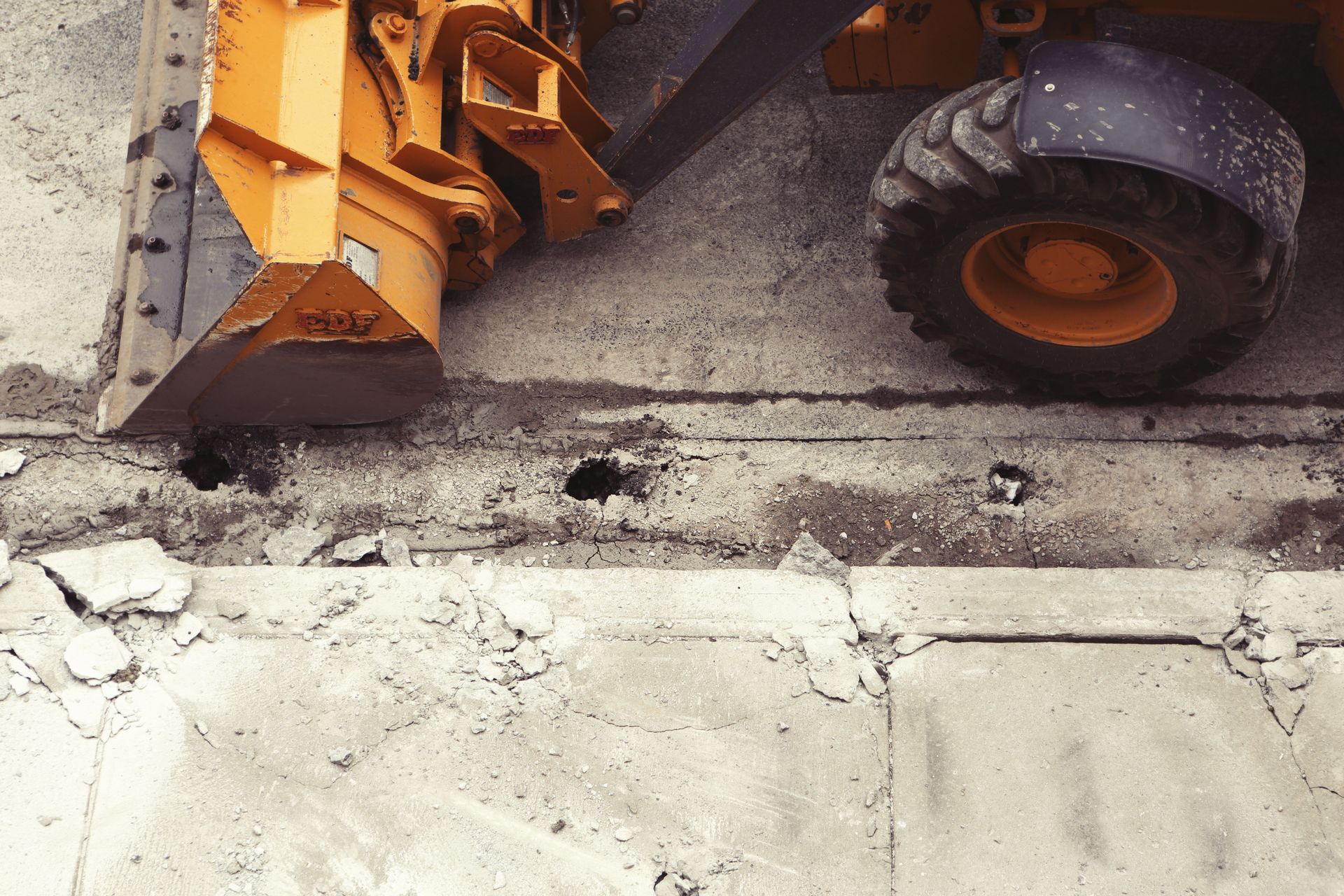
Late summer exposes concrete and masonry weaknesses across commercial sites. Heat, foot traffic, forklifts, and another round of freeze-thaw on the horizon make small defects turn into safety issues and liability risks. Trip hazards, spalling, heaved slabs at entries, and dock settlement often spike now.
This guide shows facility teams how to inspect, prioritize, and repair concrete and masonry with minimal disruption. It also outlines Americans with Disabilities Act (ADA) and code implications, cost drivers, and what to watch for when hiring. Allied Construction and Property Maintenance Inc. delivers in-house concrete and masonry crews with integrated project management so you can route pedestrians safely and keep operations moving.
What to look for on late-summer walks
Walk high-traffic areas first: entries, loading docks, sidewalks, curb ramps, dumpster corrals, and accessible routes. Document with photos and measurements so you can scope work efficiently and align on priorities.
A simple checklist:
- Trip edges greater than 1/4 inch at joints or lifted panels
- Spalling or scaling concrete, exposed aggregate, or pop-outs
- Settlement or rocking slabs at doors, thresholds, and dock aprons
- Wide or failed joints, missing sealant, vegetation in cracks
- Ponding water near entries, curb ramps, or docks
- Broken or loose masonry units, open mortar joints, failed lintels
Flag anything on accessible routes, near handrails, or at transitions that can trigger ADA non-compliance or increase slip-and-fall exposure.
How ADA and code factor into decisions
For sidewalks and curb ramps, vertical changes over 1/4 inch typically require beveling; greater offsets call for grinding or replacement. Running slope, cross-slope, and ramp landings must meet ADA criteria, and handrail or detectable warning requirements can apply at ramps and transitions. At entries and docks, thresholds, clear widths, and maneuvering clearances matter. Local building codes and International Building Code (IBC) provisions govern structural elements, guardrails, and egress.
If you are touching an accessible route, plan to correct the hazard and restore the route to compliant slopes and surfaces. A targeted fix that leaves an ADA violation in place can create more risk than it removes.
Proven repair methods for common defects
- Slabjacking or polyurethane foam lifting: Raises settled slabs at sidewalks, dock aprons, and entries with minimal downtime. Holes are drilled, material is injected, and crews adjust lift to restore elevations and drainage. Good for sunken panels where the concrete is otherwise sound.
- Joint sealing and crack repair: Clean, saw, and reseal joints with commercial-grade sealants; route-and-seal cracks to keep water and incompressibles out. This extends life and reduces spalling at edges and wheel paths.
- Epoxy injection: Fills structural cracks in concrete to restore continuity, often paired with surface sealing. Works when cracks are stable and the substrate is dry and clean.
- Partial-depth and full-depth patches: Cut, remove, and replace delaminated or spalled sections. Choose partial-depth for surface distress without deep steel corrosion; use full-depth when damage reaches reinforcement or base.
- Replacement panels: When slabs are thin, poorly reinforced, or severely deteriorated, replacing entire panels provides a durable reset and enables ADA-slope correction.
- Tuckpointing and masonry repair: Remove failed mortar, repoint, replace cracked brick or block, address lintels and sealants, and install through-wall flashing or weeps where moisture management is failing.
What drives cost and schedule
Concrete and masonry pricing varies by scope and site conditions. Typical drivers include:
- Access and protection: Night work, barricades, fall protection, and lift equipment can raise unit costs.
- Thickness and reinforcement: Heavier sections, rebar, and doweling add material and labor.
- Base and drainage: Weak base or poor drainage requires undercutting, compaction, or subgrade fixes.
- Phasing and downtime: Multi-entrance staging, safe pedestrian routing, and tenant coordination add planning and supervision, but reduce disruption.
- Curing and temperature: Late-summer heat can speed set but still requires proper curing; shaded or cool areas may need longer reopen times.
Allied provides free, site-specific estimates after evaluating thickness, reinforcement, access, phasing, and safety requirements.
Planning for safety during work
Keep people and operations moving while work proceeds. Allied’s integrated project management coordinates barricades, cones, signage, and alternate routes. For retail and healthcare, consider off-hours pours, quick-return materials where appropriate, and phased closures so priority entrances remain open. Clear tenant communication helps reduce complaints and keeps deliveries on track.
If your portfolio also needs asphalt maintenance, you can coordinate concrete, paving, and
Naperville sealcoating under one plan to minimize overall downtime.
Hiring criteria and red flags
How to find a capable contractor:
- Verify licensed, bonded, and insured status in Illinois; request certificates naming your entity.
- Ask for recent commercial references, similar project photos, and a safety record summary.
- Expect a written scope with quantities, mix designs, joint details, curing, sealants, and traffic control.
- Confirm ADA and permit familiarity and who coordinates inspections.
- Look for in-house crews and centralized project management for multi-trade scope.
Red flags:
- Vague estimates with no quantities or cure times
- No proof of insurance, or refusal to add you as certificate holder
- Pressure for large upfront payments or cash
- No plan for pedestrian rerouting, barricades, or signage
- One-size-fits-all fixes that ignore ADA slopes or drainage
Allied brings in-house concrete and masonry crews plus single point-of-contact project managers, simplifying scopes that include doors, thresholds, drainage, and entry hardware. If roof drainage is part of the issue, schedule a coordinated review with
roof repair service in Naperville.
Foundation repair, costs, and insurance basics
- Typical costs: Foundation repairs can range widely based on cause, access, building size, and method. Minor crack injections are often far less than structural underpinning or pier systems. Commercial work typically requires a site assessment to price accurately.
- Is it worth fixing: Yes, stabilizing a foundation protects structure, storefronts, MEP systems, and leasable area; it also preserves ADA compliance and reduces ongoing cosmetic repairs. Deferring can raise costs as settlement propagates.
- Insurance: Policies usually exclude wear and tear; event-driven damage, such as certain storm or impact incidents, may be considered. Coverage varies, so review your policy and consult your carrier. Allied can document conditions and provide estimates to support claims when applicable.
- Finding the right firm: Seek commercial experience with structural repairs, engineered solutions, permits, and inspections. Prioritize clear scopes, monitoring plans, and warranty terms aligned to the method.
If you manage assets in the western suburbs and need foundation assessment, start with a local, commercial-focused team. Allied provides free consultations for
foundation repair in Naperville with multi-trade coordination when interior finishes, doors, or sidewalks are affected.
Quick FAQ
- How much does it cost to repair a foundation? Costs vary from localized crack injection to structural underpinning. Commercial pricing depends on access, building loads, and engineering. A site visit is needed for a reliable estimate.
- Is foundation repair worth it? Typically yes. Stabilization protects structure, reduces long-term repairs, and helps maintain ADA-compliant routes and door operation.
- Will insurance cover it? Often not for wear and tear. Event-related damage may be considered depending on policy language. Document conditions and speak with your carrier.
- How do I find a good foundation contractor? Verify licensing, insurance, commercial references, and engineering involvement. Expect a detailed scope, traffic control plan, and clear curing and monitoring procedures.
- What are hiring red flags? No insurance proof, vague scopes, pressure for large deposits, no safety plan, and solutions that ignore ADA or drainage.
Summary and next step
Late-summer inspections catch trip hazards, spalling, settlement, and masonry failures before weather turns. Prioritize ADA routes, choose proven repair methods, and hire for safety, documentation, and phasing. Allied Construction’s in-house concrete and masonry teams and integrated project management help you complete repairs with safe pedestrian routing, clear signage, and minimal downtime. To schedule a walk-through and free estimate across Greater Chicago, call (630) 701-1172 or email
info@alliedcpm.com.