Spring roof readiness: the smart time for Chicago commercial roof inspections

Chicago winters are hard on commercial roofs. Freeze-thaw cycles open tiny seams into leaks, ice loads stress flashing, and wind scours vulnerable edges. By the time spring rain arrives, small defects can turn into costly interruptions.
Spring is the moment to get ahead of it. Temperatures stabilize, snow melts, and roofs become safely accessible for a thorough assessment. A structured inspection now helps you plan targeted maintenance before summer storm cells test every drain, seam, and penetration.
If you manage a facility in Chicago or the western suburbs, a well-timed spring inspection is one of the highest-return tasks you can schedule. Here is how to approach it, what to expect from a professional assessment, and why preventive work usually beats reactive repairs.
Why spring timing matters after freeze-thaw
In our region, winter repeatedly moves water into and out of joints. That expansion and contraction widens gaps at seams, flashing, parapet caps, and around rooftop units. Spring exposes the results. It is also when roof loads shift from ice to water, so drainage becomes the priority.
Spring inspections typically deliver the best visibility with the least risk. Materials are more pliable in moderate temperatures, so small repairs and sealant work adhere better than in deep winter, and you avoid the heat-driven expansion that can mask problems in midsummer.
The ROI of preventive maintenance vs. reactive repairs
A proactive spring inspection often pays for itself by preventing emergency calls during summer downpours. The return shows up in fewer tenant complaints, reduced interior damage, and longer membrane life. Catching a clogged drain or a lifted corner of flashing today is far less expensive than responding to an interior leak that disrupts a clinic, retail floor, or production line.
Reactive repairs will always have a place for surprise events, but maintenance done on your schedule usually costs less and produces better outcomes. Allied Construction provides free estimates and clear scopes, so you can prioritize the highest-value items across your portfolio.
What Allied includes in a commercial roof assessment
A thorough assessment documents current condition, risk areas, and recommended actions. Allied Construction’s commercial roof inspection typically covers:
- Drainage paths and components, including primary and secondary drains, scuppers, and strainers
- Flashing at walls, curbs, skylights, and edge metal, with attention to terminations and laps
- Penetrations around HVAC, vents, conduits, and support posts, including pitch pans and boots
- Seams and field membrane for splits, blisters, open laps, punctures, and surface wear
- Parapets and coping caps for movement, fastener issues, and sealant condition
- Moisture scanning where applicable, using non-invasive tools to flag trapped water beneath the membrane
You receive photo documentation, a condition summary, prioritized recommendations, and a maintenance plan. For multi-building sites, Allied consolidates findings into a portfolio view so you can stage work across locations efficiently.
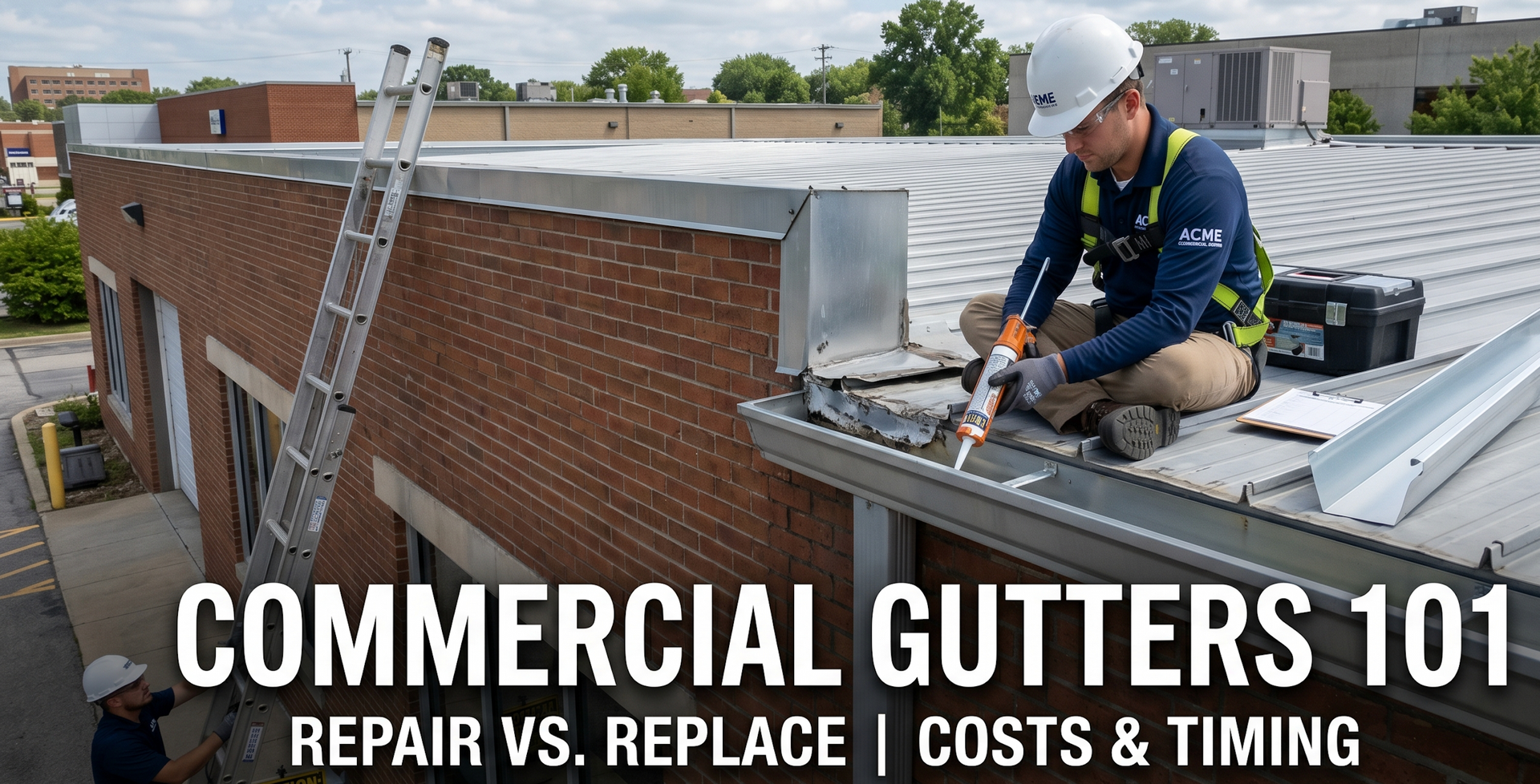
If your facility also needs gutter work as part of drainage readiness, Allied can coordinate that as well. Learn more about Naperville gutter repair options if downspouts or hangers need attention before spring storms.
How long an inspection takes and typical deliverables
Most stand-alone commercial roof inspections take 60 to 120 minutes for small to mid-size buildings, though complex facilities or large campuses can require additional time. Factors include roof size, accessibility, the number of penetrations, and whether moisture scanning is indicated.
Deliverables typically include:
- A written report with photos and marked-up roof plans
- A prioritized punch list with repair and maintenance options
- Budgetary estimates for recommended actions
- A suggested maintenance cadence and next inspection timing
Allied can schedule follow-up maintenance on the same visit if scope and weather permit, or return promptly with materials and lifts once you approve the plan.
Cost variables you should expect
There is no one-size price for roofing work, and transparent estimates are built after a site review. Variables that influence cost include roof type and age (TPO, EPDM, modified bitumen, or metal), access and safety requirements, the number of penetrations, moisture intrusion levels, and whether edge metal or coping needs replacement. Preventive work like sealing seams, clearing drains, and tightening fasteners is usually modest compared to structural repairs or interior restoration after a leak.
Allied Construction is licensed, bonded, and insured, and provides free estimates so you can compare preventive options against potential emergency costs without guesswork.
Your spring inspection checklist
Use this concise checklist to prepare your roof and your team:
- Confirm roof access and safety requirements, and gather recent leak logs.
- Clear debris from drains, scuppers, and gutters to establish baseline flow.
- Walk perimeters and parapets to flag loose edge metal or open joints.
- Note any membrane surface concerns like alligatoring, blisters, or punctures.
- Photograph rooftop unit curbs and penetrations before service begins.
Allied will validate and expand on these steps during a professional inspection and propose corrective actions you can execute before heavy summer rainfall.
Best time for repairs and replacements in Chicagoland
- Best time of year for roof repair: Spring and fall are typically ideal in the Chicago area because temperatures and moisture levels favor both membrane work and adhesives. Urgent leaks should be stabilized immediately, regardless of season, then converted to permanent repairs when conditions allow.
- Cheapest time to replace a roof: There is no universal cheapest month. Pricing depends on material markets, lead times, and crew availability. That said, scheduling early in spring or planning for fall can provide more options and reduce premium labor costs associated with peak summer backlogs or winter constraints.
If you are planning a roof replacement in the western suburbs, you can explore options and timelines for roof replacement in North Aurora to understand how scope and season affect scheduling.
Book spring maintenance to avoid summer surprises
After your inspection, prioritize:
- Drainage corrections, including clearing and, if needed, targeted repairs to scuppers and strainers
- Sealing open seams and flashing terminations
- Addressing penetrations and pitch-pan maintenance
- Repairing punctures and surface wear before UV and heat worsen them
- Evaluating edge metal and parapet caps for securement and weatherproofing
Coordinating these tasks now reduces the chance of mid-storm calls and protects interiors, equipment, and tenant operations.
For facilities in Naperville and nearby suburbs, Allied provides integrated project management and multi-trade support. If you are comparing Naperville roofing companies for seasonal work, you can review Allied’s role as a roofing contractor in Naperville to see how single-source coordination simplifies scheduling.
Quick FAQ
- Are roof inspections worth it? Yes. Regular inspections typically extend roof life, reduce emergency calls, and lower total cost of ownership by catching issues before they escalate.
- How long should a roof inspection take? Many commercial roofs can be inspected in about 1 to 2 hours, though large or complex sites may take longer, especially if moisture scanning is performed.
- What is included in a roof inspection? Expect evaluation of drainage, flashing, penetrations, seams, parapets, and field membrane, plus photos, recommendations, and budgetary estimates. Moisture scanning is included where conditions and roof type warrant it.
- What is the best time of year for roof repair? Spring and fall are typically best in Chicagoland, with emergency stabilization performed any time safety permits.
- What time of year is the cheapest to replace a roof? Costs vary by materials and scheduling. Planning work ahead of peak demand in spring or fall can help you access better availability and avoid rush premiums.
Summary and next step
Spring is the smart window to assess Chicago commercial roofs, convert winter wear into a clear action plan, and schedule maintenance before summer storms. A structured inspection by Allied Construction documents condition, prioritizes repairs, and aligns costs and timelines with your budget. To get a free estimate or book your inspection, contact Allied Construction and Property Maintenance Inc. to prepare your roof for the season with minimal disruption to your operations.
Helpful resources:
- Learn what to expect from roof inspections in North Aurora if you manage facilities nearby: https://www.alliedcpm.com/north-aurora-roof-inspection
- Explore roofing contractor services for Naperville-area properties: https://www.alliedcpm.com/naperville-roofing-company
- Plan ahead for roof replacement in North Aurora: https://www.alliedcpm.com/north-aurora-roof-replacement
- Address seasonal gutter needs in Naperville: https://www.alliedcpm.com/naperville-gutter-repair